Introduction
The changing of the seasons happens, little by little, every day of every year. With every season something new is brought, in spring, new buds are formed. In autumn, the leaves that reached their peak in the summer, fall. The crops that spent a year growing, are harvested within a day. It is something that usually goes unnoticed and is often unappreciated. Personally, by capturing the smallest of changes, the different plants, the changes of the wildlife, it helps to display the landscapes true beauty, in a form that is in its most natural, that is so commonly overlooked in a world where everybody is rushing to the next thing on their never ending lists.
In this essay, I aim to highlight the reasons why I have selected landscape and nature photography as my illustrated project and the origin of the photography itself. I am interested in pursuing landscape photography within my investigation as I enjoy being outdoors. I want to explore different locations and their contents. I would like to capture images that show the presence of nature, which is often overlooked, whilst looking at the disturbances of these landscapes.
Brief history
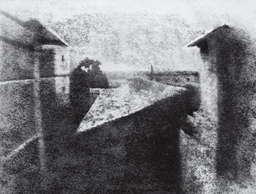
Landscape photography dates to 1826 / 1827, however it is difficult to trace the exact origin of the very first photograph. Before cameras, paintings were the only source of landscape pictures. The first image recorded of an urban landscape was taken by a French inventor Nicéphore Niépce. This image couldn’t be reproduced. For the image to be taken in the first place, the camera must have been in a place where it could sit for eight hours whilst the exposure could finish. [i]
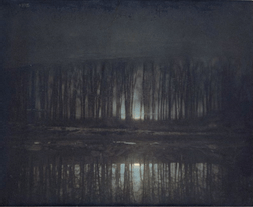
Landscape photography first became most popular during the Victorian era; however, it was an artist Edward Steichen in 1904 whose photograph, taken in New York, gained landscape photography recognition in the art world. The image, The Pond – Moonlight, is a photograph featuring the reflection of a forest in the pond’s water with the top of the moon peaking over the ridge through a gap in the trees. The final prints were created by manually applying light sensitive gums, a process based on the light sensitivity of dichromate’s and is a multi-layered printing process used in the 19th century. Any colour can be used for this type of printing, so natural-colour photographs are also possible. [ii]
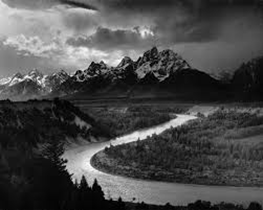
Also, within the 19th century lived the very well-known landscape photographer, Ansel Adams. An extremely avid explorer, he dedicated his life to photography. Helping found the Group F/64, an association of photographers advocating photography that favoured sharp focus and the use of the full tonal range of a photograph. [iii] Some photographers that where a part of the Group F/64 included Imogen Cunningham and Edward Weston. He was able to use the camera with extreme care and passion, but also mastered the developing of the negative and printing the final image. His images contain a high level of definition which amazed many people and continues to do so. The photographs that were taken within the 19th century was recorded using large format plate cameras on tripods. These constrained the photographer to work from a limited viewpoint.
The cameras that are in use today are much different than those used in the 18th century. In recent years, digital cameras have become the standard, with landscape photographs preferring full-frame DSLR cameras. They are focused by a lens, which is changeable, allowing the photographer to swap lenses quickly and easily, capturing an image within a matter of seconds, due to the ability to adjust the settings of the camera. The latest models are lightweight and easily portable, allowing photographers to easily access different locations. The DSLR cameras create digital photographs which means that there is no need for the use of dark rooms or the hazardous chemical processing that was once needed, and can now be viewed, processed and adjusted with the use of a computer. In recent years, it isn’t only the camera itself that has improved, the editing process of the images produced has also been affected by the technology advancements. Before, when an image was shot, it was produced slowly in a dark room. That was all that was available to them, unlike the present day where almost every photograph is manipulated or processed on the computer using software such as Photoshop or Lightroom. This allows for either small, minute changes to be made, something like editing a spot or stain out, or for a completely new object to be added in or removed. However, it can also be used in a way that brings the images to life, altering the exposure and sharpness of the images.
However, more and more DSLR cameras are being disused as the technology has advanced from within the mobile phone industry. The latest phones can capture high quality images, but unlike the DSLR cameras, there is no need for manually adjusting the camera settings as it is automatically completed for the photographer. These are smaller, more convenient and easier to use without the need for any knowledge of photography whatsoever. Of course this does mean that not all images will be perfect but for the newer generation they are much more appealing. [iv] However from Ansel Adam’s work techniques such as previsualisation, the zone system and dodge and burn enabled the photographers to develop an aesthetic linked to pictorialism. This means that smartphone photographers may find it difficult to convey their own style due to the automated settings that are placed onto the image, allowing the photographer very little control of the outcome.
Photographers research
One photographer that relates to my project is Michael Kenna, a landscape photographer who only photographs in black and white and focuses on “the atmospheric effects of photographing at night, in crepuscular light or in mist, fog and snow.” He prints with the use of a darkroom, allowing him to control the tonality of his images as well as controlling the mood that is being perceived by the viewer. [V]
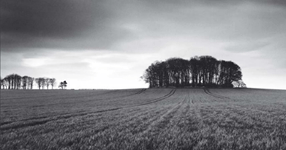
This image, figure 4, consists of a field, with the lines of the crop drawing the views eyes up the image, towards a grouping of trees, forcing the viewer to see the many different tones that the sky contains. The mood of the image is determined by the gradient of the sky, with the contrasting tones of the crop compared to the trees. The image has more of an impact to the viewers because it is in black and white. I think that if the image was in colour, the emphasis on the open, simplistic field would be lost, and would cause the viewer to be distracted by the colourful sky and green fields. The focal point of this image is the trees, with the lines of the crops leading the viewers eyes towards them. The rule of thirds looks as if it has been used to compose this image. The image is very sharp, capturing even the smallest of details, the crop for example. This means that Kenna probably used a short exposure time to create this image, as well as a wide (deep) depth of field that has been used.
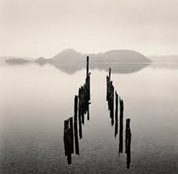
This photograph, figure 5, like a lot of Michael Kenna’s work, is very simplistic. The two rows of posts within the water draw the viewer’s eyes to look deeper into the image, into the mist that covers the island in the background. The focal point of the image is the posts. However, when looking at the image closer, the amount of detail is massive. The reflection on the surface of the water and the simplicity of the image allows the image to be very powerful in its own way, making the viewer reflect on their own self. In my opinion, I think this image is very raw, and untouched, just like the location. There are very little signs of the footprints that we humans leave behind us and the minimalistic editing that has been done on this image, reinforces this. This image looks like it has not been composed using the rule of thirds unlike the previous image, however, the image being centred highlights the symmetry within the photograph and makes the focal point more confrontational and in the viewers face.
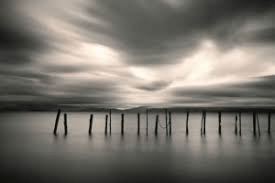
In figure 6, the moving clouds bring emotion to the image as well as capturing the focus of the viewer. The different tones in this image bring the image to life and not allowing it to be flat. This lack of colour accentuates the light and shadows within the image, and the large contrasts within the image bring the viewers’ attention quicker than if it were to be in colour. Being in black and white, it makes the viewer’s pause and look at the image closely, allowing them to focus on the focus of the image. In this image, the focus is of the sky, and its reflection on the water, broken by the paired posts.
Another photographer that would interlink with my project would be Art Wolfe. Art Wolfe, an American photographer that is best known for his colour filled images of landscapes, wildlife and native cultures. This photographer, unlike the one previously mentioned, shoots and edits all his images in colour. Wolfe uses a Canon camera with multiple lenses including macro and telephoto lenses. [vi] [vii]
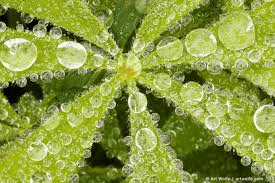
This image, figure 7, although simple, has captured every tiny detail that is present. A macro lens has been used, which has allowed the photographer to create a photograph that is extremely close to the object. The leaves of the plant are covered in water droplets, some larger than others, which has made the image have an added flare. The water droplets make the photograph stand out compared to the average photo of a plant. As well as the macro lens that has been used to magnify the image, the water droplets add extra magnification and depth, really making the fibres on the leave to make an appearance. After some investigation, I have found that the photographer also used an ‘extension tube’. This extra piece of equipment makes a large gap between the lens and the cables which enables Wolfe to get closer to the object that he is photographing. The macro lens allows the intricacy of natural forms to be viewed at macro scales.
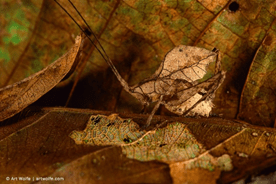
This image, figure 8, although not the most fantastical image Art Wolfe has taken, once again shows how close the photographs can be, and, although this image is very close, the object is instantly identifiable. The camera has captured every vein on the leaf, adding texture to the image. None of Art Wolfe’s images are ‘doctored’ or ‘Photoshopped’ meaning that the colours are all raw and how they were at the time of the shoot. Being so close to the object slows the viewers down and makes them question what they are looking at. For example, in the image above, it looks as if there is a stick insect present. There is no way to confirm this however, it could raise a few questions. The macro photography allows nature to be captured in its original form, untouched.
Another photographer, Pip, is a self-taught landscape photographer, bringing his vision to wider audiences through high end commissions and moving images.
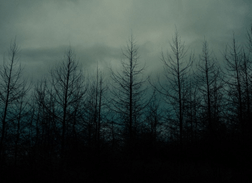
Figure 9, an eerie atmosphere is conveyed with the contrast between the lighter, soft, cloudy sky against the abrupt, sharp, dark trees. The blue tinted sky produces a cold and distant atmosphere within the image and helps to depict the stillness of the surrounding trees. the photograph was taken with a high magnitude, producing a dark and dim image, with nothing but the outline of the trees to focus on.
Relevance of the photographer’s research to my personal project
My personal project links to my photographer’s research because of the subject, landscape photography. I would like to attempt to include a lot of the techniques that have been used, within the photographer’s images, in my own photographs more frequently, including the use of the ‘golden rule’ and the ‘rule of thirds’ as well as the macro techniques. I would like to try and invest in an extension tube in order to further improve my macro technique which I think will bring another dimension to my images.
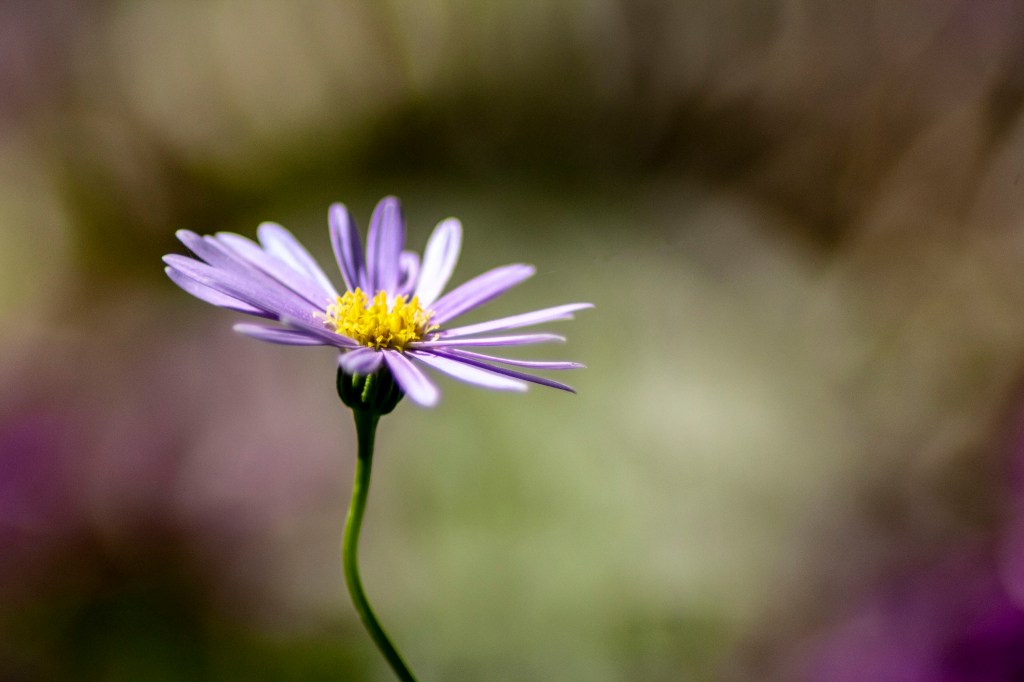
In this image, shot by myself, I have used the rule of thirds to compose it. The image’s composition builds interest within the image and makes it stronger overall. This image was shot using a macro lens, creating the sharp, crisp focus on the flower.
A photographer that particularly influenced me during this miniseries of images was Patty Hankins, a professional fine art floral photographer. Not only does she photograph the flowers in nature, untouched, but she also takes them into a studio, allowing her to pay closer attention to the details that aren’t visible outside.
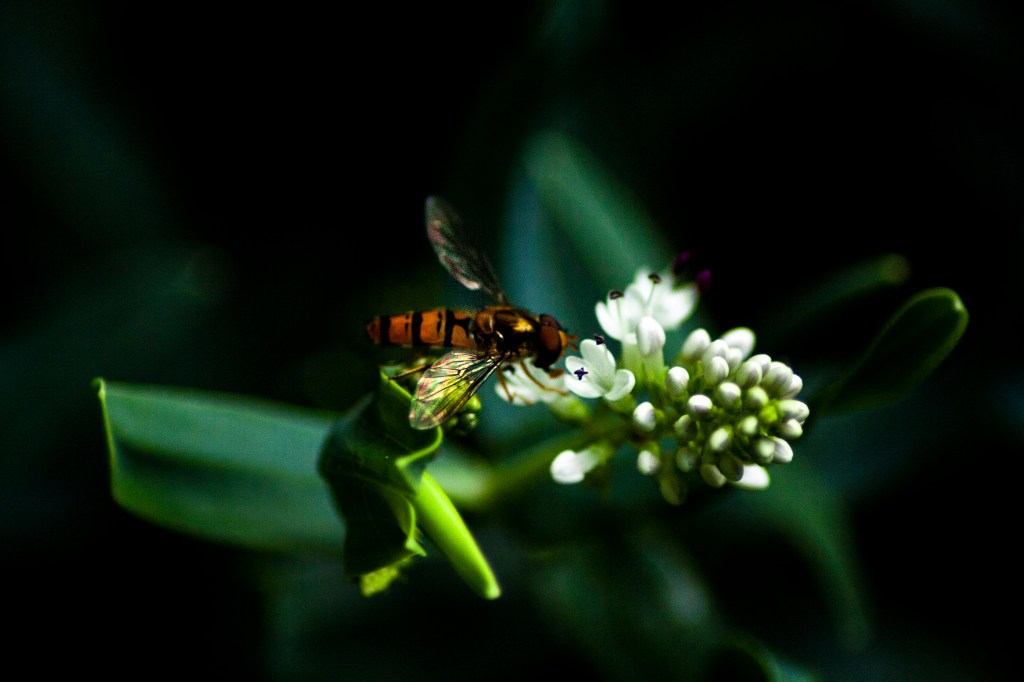
Then, in the photo above, the golden rule was used. By using this rule, the image is very pleasing on the eye. The soft colours, produced by the light, were then edited within Photoshop. A macro lens was also used within this image.
The future
In the future, being almost eighteen years since the first model, the Nikon D1, was released, there is a high chance that DSLR cameras will become a thing of the past. The rising figures show that smartphones are becoming more popular than ever for photography with digital camera sales declining by over eighty percent since 2010. By using a smartphone, there is a shrinkage in the amount of equipment that is required to be carried around, yet due to the camera quality improving faster than ever, everyone will soon have a top quality camera in their pocket that is available to post on social media within seconds, with no editing process required. Smartphones also allow the most inexperienced of photographers, or even the general public, to operate, with no settings to adjust or lenses to carry and swap.
Artificial intelligence is also making an appearance within the latest cameras, with built in computing components performing tasks that were once required to do manually, such as automatic focussing and automatic exposures, making it easier to create the ‘perfect’ image at the push of a button.
The editing process is also likely to change, with most photographers currently spending more time on the processing of the images than completing the shoot. With the most well focused, balanced and optimum images being selected and the RAW files being automatically adjusted, applying the perfect tonal adjustments, set a correct white balance, sharpening and softening, it could save hours of extra work, and allow even the most amateur photographers to produce professional looking images.
Already, a connection between the newest edition cameras and the smartphones are possible, through either Bluetooth or Wi-Fi, backing up all images, edited or RAW, when the camera is in the suitable conditions. Soon, cameras will be able to automatically connect to the Wi-Fi, ridding the need for an SD card or other physical storage, and reducing the risk of losing the memory card, damaging, or corrupting the files.
As new technologies continue to emerge and develop, the way in which we view the images may change too. The virtual reality concept is still being developed however, once finished, it will have a huge impact and change photography as we know it completely. With photographs still being viewed in a 2D experience, how long will it be until they are being brought to life, having the sounds as well as the image itself? This would allow people to relive the moment that has been captured, almost permitting for the memory to be explored multiple times over. [viii]
Conclusion
When continuing with my project I hope to continue to develop my technique when working with macro photography whilst also continuing to sustain my eye for compositional elements within my photography. With regards to the editing process, I want to bring a more experimental element into my project, this includes returning to locations where I have previously shot, then stitching, layering or presenting the comparison images together, illustrating the change in the landscape. I would also like to attempt in using video footage to produce a time-lapse of the seasonal days.
My research has shown that the technology that we use within our photography, to enable use to create the best images, that stand out from the crowd and what we class as ‘advanced’ or ‘the best’ is nothing compared to what is going to be released in the coming decade. It will turn the ideas and concept that we consider ‘advanced’ and will force us to reconsider the ‘best photographers’. The technology will bring a new, alternate method of photography and will allow current photographers to achieve things that people such as Nicéphore Niépce and Ansel Adams could never even have dreamed of.
Reference and Biliography of all sources used
[i] AMBROSE, D.
A Brief History of Landscape Photography
Bibliography: Ambrose, D. (2019). A Brief History of Landscape Photography. [online] Light Stalking. Available at: https://lightstalking.com/history-landscape-photography/ [Accessed 18 Nov. 2019].
[ii] GUM BICHROMATE
(En.wikipedia.org, 2019)
Bibliography: En.wikipedia.org. (2019). Gum dichromate. [online] Available at: https://en.wikipedia.org/wiki/Gum_bichromate [Accessed 18 Nov. 2019].
[iii] ANSEL ADAMS
(En.wikipedia.org, 2019)
Bibliography: En.wikipedia.org. (2019). Ansel Adams. [online] Available at: https://en.wikipedia.org/wiki/Ansel_Adams [Accessed 18 Nov. 2019].
[iv] DIGITAL PHOTOGRAPHY
(En.wikipedia.org, 2019)
Bibliography: En.wikipedia.org. (2019). Digital photography. [online] Available at: https://en.wikipedia.org/wiki/Digital_photography [Accessed 18 Nov. 2019].
[v] MICHAEL KENNA | PHOTOGRAPHER’S BIOGRAPHY & ART WORKS | HUXLEY-PARLOUR GALLERY
(Huxley-Parlour Gallery, 2019)
Bibliography: Huxley-Parlour Gallery. (2019). Michael Kenna | Photographer’s Biography & Art Works | Huxley-Parlour Gallery. [online] Available at: https://huxleyparlour.com/artists/michael-kenna/ [Accessed 18 Nov. 2019].
[vi] Art Wolfe
Bibliography: En.wikipedia.org. (2019). Art Wolfe. [online] Available at: https://en.wikipedia.org/wiki/Art_Wolfe [Accessed 25 Nov. 2019].
[vii] Art Wolfe’s Intimate Landscapes
Bibliography: B&H Explora. (2019). Art Wolfe’s Intimate Landscapes. [online] Available at: https://www.bhphotovideo.com/explora/photography/features/art-wolfes-intimate-landscapes [Accessed 25 Nov. 2019].
[viii] Bibliography: DigitalNet. (2019). How are Smartphones Shaping the Future of Photography? [online] Available at: https://digitalrev.com/2017/05/11/how-are-smartphones-shaping-the-future-of-photography/
[Accessed 5 Dec. 2019].
Figure 1 –Bibliography: Anon, (2019). [image] Available at: http://100photos.time.com/photos/joseph-niepce-first-photograph-window-le-gras [Accessed 18 Nov. 2019].
Figure 2 – Bibliography: Anon, (2019). [image] Available at: https://www.google.com/url?sa=i&source=images&cd=&ved=2ahUKEwjHqZKMjvTlAhWh34UKHWGRAQsQjRx6BAgBEAQ&url=https%3A%2F%2Fen.wikipedia.org%2Fwiki%2FThe_Pond%25E2%2580%2594Moonlight&psig=AOvVaw1RYInc7DungdVVfBaulSvm&ust=1574178515234769 [Accessed 18 Nov. 2019].
Figure 3 – Bibliography: Anon, (2019). [image] Available at: https://www.google.com/url?sa=i&source=images&cd=&ved=2ahUKEwiA4JHYjvTlAhVQUxoKHXN2CFAQjRx6BAgBEAQ&url=https%3A%2F%2Ftheculturetrip.com%2Fnorth-america%2Fusa%2Fcalifornia%2Farticles%2Fthe-ansel-adams-biography-pioneering-wildlife-photographer%2F&psig=AOvVaw20THtY6eHZFq0VZlB9EhdA&ust=1574178668662881 [Accessed 18 Nov. 2019].
Figure 4 – Bibliography: Anon, (2019). [image] Available at: https://www.google.com/url?sa=i&source=images&cd=&ved=2ahUKEwi7wqqEj_TlAhUDCxoKHXpTCvMQjRx6BAgBEAQ&url=https%3A%2F%2Fwww.jacksonfineart.com%2Fartists%2Fmichael-kenna%2F&psig=AOvVaw0EXDVFN7duOZmZewKkeSaa&ust=1574178768089240 [Accessed 18 Nov. 2019].
Figure 5 – Bibliography: Anon, (2019). [image] Available at: https://www.google.com/url?sa=i&source=images&cd=&cad=rja&uact=8&ved=2ahUKEwi__8yrj_TlAhWNzIUKHbuJBU0QjRx6BAgBEAQ&url=%2Furl%3Fsa%3Di%26source%3Dimages%26cd%3D%26ved%3D%26url%3Dhttps%253A%252F%252Fwww.johnpaulcaponigro.com%252Fblog%252F14960%252F18-quotes-by-photographer-michael-kenna%252F%26psig%3DAOvVaw0EXDVFN7duOZmZewKkeSaa%26ust%3D1574178768089240&psig=AOvVaw0EXDVFN7duOZmZewKkeSaa&ust=1574178768089240 [Accessed 18 Nov. 2019].
Figure 6– Bibliography: Anon, (2019). [image] Available at: https://www.google.com/url?sa=i&source=images&cd=&cad=rja&uact=8&ved=2ahUKEwitubv0jfvlAhXy8eAKHcZ4BYgQjRx6BAgBEAQ&url=http%3A%2F%2Fhalsey.cofc.edu%2Fmain-events%2Fartist-lecture-michael-kenna%2F&psig=AOvVaw1m45zhPs0XNVveABKNZY7Q&ust=1574418950306666 [Accessed 21 Nov. 2019].
Figure 7 – Bibliography: Anon, (2019). [image] Available at: https://static.bhphotovideo.com/explora/sites/default/files/01-artwolfe_rain0808300021.jpg [Accessed 25 Nov. 2019].
Figure 8 – Bibliography: Anon, (2019). [image] Available at: https://www.bhphotovideo.com/explora/photography/features/art-wolfes-intimate-landscapes [Accessed 25 Nov. 2019].
Figure 9 – Bibliography: Anon, (2019). [image] Available at:
https://www.theaop.org/var/uploads/cache/filemanager/1/0/105514/f834e04580fb0456b9341f5ed6bd88c6/pipforestofdean.jpg [Accessed 25 Nov. 2019].
 Kate Watson - A Level Photography

